Bodybuilding world champion numerous times.

One of the most highly paid actors in the last few decades and a living screen legend.

And then the governor of California.

Arnold Schwarzenegger’s resume sounds more like the resume of three men rather than just one. How did he do it?

Here are a five clues, success habits and tips from Arnold himself.

1. Believe in yourself.

“I knew I was a winner back in the late sixties. I knew I was destined for great things. People will say that kind of thinking is totally immodest. I agree. Modesty is not a word that applies to me in any way – I hope it never will.”

“We all have great inner power. The power is self-faith. There’s really an attitude to winning. You have to see yourself winning before you win. And you have to be hungry. You have to want to conquer.”

“The mind is the limit. As long as the mind can envision the fact that you can do something, you can do it, as long as you really believe 100 percent.”

A very strong belief in yourself can be ridiculously useful.

Corny as it may sound, your belief in yourself determines a lot about your journey and your results.

But the problem with statements like “Just believe in yourself!” is that they don’t come with any practical instructions on how to actually believe more I yourself. So you have a hard time getting anywhere.

I have found a few things that have been helpful.

  • First, by realizing that you are able to handle negative stuff that comes your way your belief in yourself and your capabilities grows.
  • You can also work on a similar process voluntarily. By setting goals and achieving them your belief in yourself increases. And by facing your fears and finding that you can indeed survive such experiences your belief in yourself goes up too. None of these options may sound that glamorous, fun or quick. And a lot of the time they aren’t. But like with so much else, you have to put in effort to get good results.

But there is also another side to this challenge. Quite a bit of the problem with a lack of belief in yourself comes from internal self-sabotage, self-limiting beliefs and resistance within your mind.

It’s you holding yourself back.

I have found that reading Eckhart Tolle’s books like “A New Earth” – or books on mindfulness in general I guess – to help you realize that you are not your ego, thoughts or emotions and rereading to strengthen and deepen that belief can be very helpful to reduce the inner struggle, over-analyzing and self-sabotage.

Over time you can get better control over your mind and you’ll stop listening so much to your own negative inner voices and emotional resistance.

Having a reasonably good handle on that part makes it easier to see yourself doing what you want to do. Because, as Arnold says, you have to be able to envision what you want to do or it will be very hard or just impossible bring that vision into reality.

By getting better control over your mind it becomes easier to hold this vision in your mind day after day, week after week. You’ll be less prone to self-sabotage. And your belief will waver less when being questioned or worse by other people or just society in general.

2. See struggle and failure as something positive.

“Strength does not come from winning. Your struggles develop your strengths. When you go through hardships and decide not to surrender, that is strength.”

Failure is seldom the end of the world. It’s a part of the journey, a part of the learning curve.

The problem is just that if you have a scarcity mentality then every failure or potential failure may seem as the sky falling. This can hold you back from performing well. Or from taking action at all.

The key to overcome this is to develop an abundance mentality that tells you that there are always more opportunities. This allows you to not take the setbacks too seriously.

One way to help yourself to develop such a mentality is to replace some of the usual input – news, advertising – with information and the vibe from personal development authors/speakers.

Another way is just to hang out more with people with an abundance mentality. Or just people that are positive and enthusiastic about life.

Now, most of the time you only really fail when you give up and surrender. If you keep going you’ll build your inner strength to live and move through rough patches.

And if you are able to look at your setbacks and learn from them you can also deepen you knowledge, avoid some mistakes in the future and find a better path towards your goal.

Remember that to succeed you need those failure. They make you stronger and smarter and that build-up of yourself is vital to success.

3. Go the extra mile.

“The last three or four reps is what makes the muscle grow. This area of pain divides the champion from someone else who is not a champion. That’s what most people lack, having the guts to go on and just say they’ll go through the pain no matter what happens.”

Going the extra mile. It’s not easy.

Personally I think this has often been because I have just thought too much.

Overthinking often leads to negative thought spirals where you use your mind to decrease your own strength through self-doubt. And if you add up all the overthinking you can waste months or perhaps even years of your life.

It’s more useful to just stop thinking when all then thinking that is needed is done. And to then just go and do what you choose to do.

And then to learn from your experiences and to keep going.

4. Go work out.

“Training gives us an outlet for suppressed energies created by stress and thus tones the spirit just as exercise conditions the body.”

Yes, working out is very useful in more than one way.

I have found that one of the best ways to turn an anxious, negative or weak mood fully around is simply to exercise.

It is also reliable because it is not so dependent on your mind. You just have to drag yourself wherever you need to go and make your body do certain movements to get the desired result.

And, anyway, how are you going to be able to go the extra mile without extra energy? Over the last few years I realized that many problems are simply based in a lack of energy.

So working out or not isn’t much of a choice really. If you aren’t naturally a bouncy, high energy person then you have to exercise in some way to create that energy you need to achieve whatever it is you want in your life.

5. Go and help others.

“Help others and give something back. I guarantee you will discover that while public service improves the lives and the world around you, its greatest reward is the enrichment and new meaning it will bring your own life.”

Helping others is valuable in so many ways. Beside the wonderful upsides that Arnold brings up – like the fact that you are helping people out and at the same time enriching and adding meaning to your own life – you also create a lot of relationships.

And the Law of Reciprocity, the urge to give back is strong in people. If you provide value and help to them then they will often be inclined to give you a hand when you need it. Or feel the need give back by paying it forward and helping other people.

This creates big, expanding upward spirals of positive actions and thoughts. And that can be very useful for us all.

Aesop’s Short and Simple Guide to Living a Happier Life

“Adventure is worthwhile.”

About 2500 years ago a slave called Aesop lived on the Greek island of Samos.

He is known for the fables that he wrote down. Many of them were even older that Aesop and had been passed down through the ages through the oral tradition.

So even though these seven useful tips are attributed to Aesop, they may be much older than that.

1. Your wishes may not be all that they are cracked up to be.

“We would often be sorry if our wishes were gratified.”

We wish for something. A new car, a new job, a new relationship or perhaps a new pair of shoes. And perhaps you think: “if I only get this thing, then I’m home, then I’ll feel happy and good all around”.

And then you get it. And it’s awesome. But often for just a while. And then you may feel like maybe something went a bit wrong. Like it didn’t fulfil you or complete you like you thought it would.

Why? Well, after while when you get used to something, when it becomes normal, then the ego tends to want more once again.

Or maybe you can’t enjoy something for what it is because even though your environment changes, you are still the same. The same person with the same outlook on life. With the same self-imposed barriers for your own success and happiness and maybe self-sabotaging behaviour. And until you take a look at those things you may find yourself repeating the same patterns over and over. When you are the same, you often tend to get the same results over and over again.

Also, our wishes can often come through accompanied by unexpected and not so pleasant side effects. Things may seem just perfect when you dream about them. In reality, it can become a little more complicated and messy.

Now, new things or people can be great. But if you think this one thing will fix all your problems or focus on the wrong aspects – what is not perfect, how can I get more etc. – instead of the positives and gratitude then you may find yourself always looking for the next thing and create quite a bit of stress and unhappiness within.

2. Learn not only from your own life.

“Better be wise by the misfortunes of others than by your own.”

This is a very useful thing to keep in mind. Not the easiest to implement consistently though. Some things are very hard to learn by just watching others make a mistake.

You have to make it yourself, get the experience of it and learn about the thoughts and feelings associated to it. With that understanding it can be easier to actually learn to avoid doing the same mistake over and over.

However, to keep your eyes and mind open to the mistakes and misfortunes of others around you – or via books or blogs – is still very useful. It can allow you to make quicker and less painful progress, for instance when you are a beginner at something.

3. Beware of complacency.

“Don’t let your special character and values, the secret that you know and no one else does, the truth – don’t let that get swallowed up by the great chewing complacency.”

One of the big, and sneakiest, obstacles to living the life you wish for is complacency. It tells you that it’s easier to just stay where you are, to watch TV and eat snacks instead of for instance working out or trying something new. Or expressing yourself in a genuine way.

Complacency might give a feeling of things being good enough. Or a sense of security. But a sense of security is often a just false sense of security. You never really know what will happen.
If you want to fulfil more of your potential, if you want to find out what you really can do, then complacency isn’t such a good idea. But how do you keep yourself from falling into it?

I don’t have an easy answer. I think you have to keep your focus on the right things to help yourself to grow. And not only check your own thinking and actions continually but also fill much of your life with people and information that will inspire you, challenge you and keep you in a supportive environment. And keep you from falling back into a lazy, comfortable rut.

4. Work on your own goals.

“He that always gives way to others will end in having no principles of his own.”

“If you allow men to use you for your own purposes, they will use you for theirs.”

One good reason to have a direction and goals in life is simply because if you don’t, then someone else does. And that person will get the people without goals to work on his/her goal. Or as the second quote suggests, they might help you but with an ulterior motive.

And so you lose your personal power. You give it away to someone else by not having your own direction, by not keeping your own hands on the wheel. And it may not feel that horrible really. It might feel safe.

But on the other hand, if you start setting goals and get a direction in life you tend to perk up and feel more empowered. That vague, underlying uneasiness that seemed to float through your life start to vanish. You feel more alert. And you can start to work much more on what you really want out of life, instead of what someone else may tell you that you should do or want.

5. Kindness is always good.

“No act of kindness, no matter how small, is ever wasted.”

Any act of kindness can put a positive spark into the world. Just a genuine compliment can make a person’s day. And even if someone doesn’t appreciate your kindness you can still feel good about handing it out. In the end, their response is their business. And in the long run, you tend to get what you give.

6. What they say might not really be about you.

“People often grudge others what they cannot enjoy themselves.”

“The unhappy derive comfort from the misfortunes of others.”

Of course, criticism that may be valid should be taken seriously. But negativity directed towards you is pretty seldom about you. It’s more about someone else having a bad day, week or year and directing their negative energy at anyone passing by in their life.

So much complaining and negativity that people put out into the world is about how they feel about themselves and their lives. The problem is just that we are often so focused on own lives that we take every negative thing said to us personally. But the world doesn’t revolve around me or you.

So remember these two quotes when someone’s directing negativity towards you.

And more importantly, remember those quotes when you feel the need to lash out towards someone. Ask yourself what the real problem in your life is. And what you can do about it. Instead of just lashing out and feeding more negativity into your and someone else’s life.

One thing you can pretty sure of is that the more people try to boost their own value and temporary positive feelings by putting someone else down, the worse they feel about themselves and their lives. And that goes for you and me too of course.

7. Help yourself.

“The gods help them that help themselves.”

The ones that help themselves consistently by making plans and taking action get more opportunities and more of what may be perceived as luck. Things just seem to line up for them. While others may stand on the sidelines and begrudge all that luck and success that those people have.

The more you help yourself, the more help you tend get from the world around you. If you don’t help and empower yourself then there will probably be a whole lot less help of any kind coming your way.

Jonathan Swift’s Top 7 Words of Wisdom

“May you live all the days of your life.”
Jonathan Swift was a writer that lived a couple of centuries ago (1667-1745).

He is perhaps most known for classics like “Gulliver’s Travels” and “A Modest Propsal”. The latter being the ironic and shocking essay where he suggested that impoverished Irish people should sell their babies as food to rich people. Such works has earned Swift a reputation as one of the finest satirists of all time.

Since Swift was a writer there is a ton of things to quote. Here are seven of my favourite words of wisdom.

1. Don’t fear to be wrong.

“A man should never be ashamed to own that he has been in the wrong, which is but saying… that he is wiser today than yesterday.”

So much of what we learn in society is about how you should not fail and not make mistakes. In school we are taught to get good grades and play by the rules. And so always taking a safe route and not taking risks can become an ingrained behaviour as we learn to associate failure with shame and pain.

But one should really not be afraid of making mistakes. Or admitting that he or she has been wrong. By recognizing that you can release the negative emotions that may dwell within and move on to the next thing. Admitting that you have been wrong also makes it easier to clearly analyze what you did and what you can learn from the experience.

2. Money is useful. Love of it is hazardous.

“A wise man should have money in his head, but not in his heart.”

Money is very useful. But if you let it take the wrong place in your life it can wreck havoc.

It can create greed and much negativity in your life. And if you love the money, you’ll probably just want more and more. No matter how much you get. And it may not fill you up and finally make you happy as you may have hoped.

The drive to always want more can become like filling a bucket with a hole in it. And as you slowly realize that this won’t work as you had hoped bitterness and negativity can start to feste.

Now, it’s important to not let this reasoning lead you to believe that money is evil. Money is a tool. It can help you to achieve many positive things.

3. Dig where you stand.

“Although men are accused of not knowing their own weakness, yet perhaps few know their own strength. It is in men as in soils, where sometimes there is a vein of gold which the owner knows not of.”

It’s very easy to fall into an addictive pattern of criticizing yourself and others. But what are the positive things in you and the people around you?

If you just look for things to criticize then that is what you will see. If you look for things to criticize in yourself that is what you will see in yourself and pay attention to in others.

So what can you do? You can start digging where you are standing. Instead of asking yourself those negative questions continually, ask yourself: what is good about me? Ask yourself where your strengths and talents lie. And don’t give up at once just because a negative mindset may initially not let you see what’s good and positive about you.

What you focus on most of the time is what you will see of reality. Knowing your weaknesses and learning from mistakes is helpful. But to dwell on criticism and the negative parts will just keep you in a loop where you create more of that for yourself.

At some point it’s useful to move on from that and start to shift your focus to the positive. And see what gold that will help you uncover.

4. Go further than you may think you can.

“I’ve always believed no matter how many shots I miss, I’m going to make the next one.”

One big problem with success is that you may want it right now. Or at least very soon. No wonder, advertising continually bombards us with messages of how we can become thin or rich in just 30 days. And people often want to believe in that.

Now, I’m not saying that a lot of the stuff out there doesn’t work. They probably do work. I’m just saying that it may take more time, patience and work than advertised to get you where you want to go.

It’s useful to take a break from advertised perspectives and let more realistic perspectives seep into your mind. Learn from people who have gone where you want to go. Talk to them. Read what they have to say in books or online. This will not give complete plan but a clearer perspective of what is needed to achieve what you want.

And then you plug away. You don’t let setbacks or failure discourage you. You go out and try again. And just when you feel like giving up you go on a little further. And a little further.
Because it’s often darkest before the dawn.

5. Put down the extra, unnecessary baggage you are carrying.

“The latter part of a wise person’s life is occupied with curing the follies, prejudices and false opinions they contracted earlier.”

We pick a whole lot when we are young. Some of it is helpful. A lot of it will hold you back and create a lot of unnecessary suffering in your life.

You may have learned things from society – or sometimes gotten stuff drilled into your head – when you were young. You may have taken what someone said or did to you once or repeatedly as an absolute truth about you and your life.

But as a grown up, as you start to examine your life and beliefs you may discover that those things was just things that happened. They are in the past. You are here now.

And by grasping that it’s you who are always in control of your life – that you are creating it right now – you understand that unhelpful beliefs or what happened doesn’t have to mean that much really.

You can choose to drop them and continue with a lightness in your step down a road that you are creating for yourself now. One tip that can help you with that is to first accept that you are carrying the negative thing and how it is affecting you. And then to let it go. Acceptance of what already is does – even though it may sound counterintuitive – make it easier to let something go.

6. Be good to yourself in simple ways.

“The best doctors in the world are Doctor Diet, Doctor Quiet, and Doctor Merryman.”

It’s nowadays common to run yourself into the ground and then, as you feel like a shadow of your former self, to seek help.

But a big part of keeping your health – mentally and physically – in good shape is to prevent problems before they even show up and force you to go to the doctor.

Swift brings some common sense into this challenge. By doing simple things consistently, by making them ingrained habits one can avoid many problems down the line.

  • Doctor Diet. Eat not too little or too much. Eat slowly to really enjoy the taste and avoid overeating, an upset stomach and added stress.
  • Doctor Quiet. Always being around noise, other people and stimulation via a lot of information can drain you. It’s important to find some quiet time for yourself regularly to avoid being overloaded. Being out in nature is for instance one good way to reconnect with the quiet and stillness.
  • Doctor Merryman. How happy and positive one wants to feel is often to a large degree a choice. You can cultivate a negative attitude towards everything. Or a positive one. 

Now, this may sound like almost stupidly simple advice. And the information is very simple. Many very helpful things are very simple.

More advanced tips can sound intriguing because one may associate complicated with better. But everything has to have foundations. Without those everything you build on top of them will only work at a limited capacity or sometimes just crumble.

7. Be open to the idea that you can always learn.

“No man was ever so completely skilled in the conduct of life, as not to receive new information from age and experience.”

Being open to this will open up your mind. If you think you know everything, great insights and wonderful new paths to explore will just pass you by.

By being open you’ll see, feel and learn things you wouldn’t otherwise. But be careful of focusing too much on learning from books, blogs etc. They have a place and can help you correct things may have done backwards for all of your life.

But the most important thing is to live. And to learn from your experiences. Because it is there you find true understanding of things.

“A well-spent day brings happy sleep.”

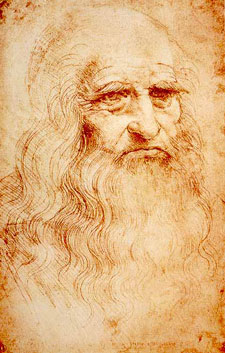
If you want tips on how to become more productive, one awesome source would be Leonardo da Vinci.

He painted a whole lot of classic paintings such as the Mona Lisa and The Last Supper. His journals contain ideas for inventions like hydraulic pumps, steam cannons, helicopters and hang gliders. He was also, among other things, an anatomist, sculptor, botanist and musician.

Da Vinci got stuff done. A lot of stuff.

How did he do it? Well, here is a guide with his tips for getting things done.

1. Do.

“I have been impressed with the urgency of doing. Knowing is not enough; we must apply. Being willing is not enough; we must do.”

“It had long since come to my attention that people of accomplishment rarely sat back and let things happen to them. They went out and happened to things.”

If you want to get things done you have to do things. If you want big results you often have to take massive action. There is no way to get around taking action if you want real life results.

But it’s easy to get stuck in a mindset where you in a way substitute thinking for action. You think and think and take action just once in a while.

One thing that gets you stuck in this mindset is that you may see other people doing the same thing. And so your habit of taking action once in a while gets reinforced since it feels like the “normal” thing to do. The fear of failure and what people might say if you try, fail or succeed are powerful factors too.

But to get what you want you need to break out of that. You need to take a lot of action. And if you are an overthinker or procrastinator like I was then there is probably room for a lot more action every week.

I think the first step to taking more action is just to be aware of how much action you are actually taking. To be aware how much time you are spending thinking or planning. And catch yourself when you get stuck in unproductive thought patterns. And then adjust to take more action.

How can you snap yourself into action? Two tips that works well for me are:

  • Pump up your enthusiasm. One way of doing that is to see what’s positive in any situation. Then build on that to get your enthusiasm going. Perhaps it’s just a thing or two. But that glimmer of positivity can be a starting point to change your perspective to a more positive one where you can find enthusiasm. And whatever the situation you are in will often be easier and more pleasurable to handle. Another way to pump up your enthusiasm is to get an enthusiastic vibe from other people. Listen to CDs with enthusiastic people – Brian Tracy and Wayne Dyer are two helpful guys – for perhaps 20 minutes. When you are done listening you’ll probably feel a lot more enthusiastic. Or hang out with enthusiastic people and get them to talk about what they are enthusiastic about. Enthusiasm is contagious, so use that fact to help yourself.
  • Just do it anyway. If you don’t feel like you could pump up your enthusiasm, just go and do what you want to do anyway. You may not want to go to the gym. But you do it anyway. And after you’ve been there for a while you are glad you went there, because now you are getting your workout done. And you are feeling proactive, enthusiastic and good about yourself.

2. Do. Experience. Understand.

“Experience does not ever err. It is only your judgment that errs in promising itself results which are not caused by your experiments.”

“Although nature commences with reason and ends in experience it is necessary for us to do the opposite, that is to commence with experience and from this to proceed to investigate the reason.”

If you take little action it’s easy to overestimate the value of the results. A failure or a mistake might feel like the end of the world. You may perhaps you beat yourself up about it for the rest of the week.

That won’t help much though. As you learn to take more action, the results contain less emotional power. You don’t get overwhelmed or lost in a sad funk. You also realize that the world doesn’t revolve around you. People will probably not care as much as you think if you try, fail or succeed with something. They have their own lives to worry about.

So instead learn to take the lessons from a mistake or failure. Do not take the failure so seriously but instead see it – just like everything else – as a valuable experience.

So dive into life. Get experiences, because it is only here you will get some real understanding.

3. Be consistent.

“Iron rusts from disuse; stagnant water loses its purity and in cold weather becomes frozen; even so does inaction sap the vigor of the mind.”

It’s easy to get riled up and get going with something new on an enthusiastic high. But that initial enthusiasm tends to dissipate. That’s when you hit a plateau. That’s when you need to keep moving. Doing everything in small spurts and then turning to the next thing when something loses it “newness” makes it hard to get what you want.

You have to be persistent. And consistent. Then you can get pretty much anything done. One of the big reasons why people don’t get what they want is simply that they won’t keep going. Or that they go, stop, go, stop. Persistence and consistency isn’t exactly the sexiest things in personal growth. But they are ridiculously helpful.

Because the results you want may not come to you tomorrow or next week. Improving your life is often hinges on the ability to not go running around for new magic pills all the time or choosing the instant gratification option every time.

So, how do you become more consistent?

  • Be aware. Just by being aware of what you are doing – and not doing – you can stop and change how you think and act in your everyday life. This will take time, but little by little you can avoid your own pitfalls – such as for instance the instant gratification route – more and more.
  • Set the context for your day. What you do early in the day often sets the context for your day. And your days are your life. We have a tendency to want to be consistent with what we have done before. One thing that can give you a good start is to do the hardest and/or most important thing first. If you start your day like this then you don’t have to worry about that special task for the rest of the day. Taking this route makes the day feel easier and you’ll have less inner resistance to getting the rest of the tasks of the day done. Another way to use this tip is to work out early in the day. It will make you feel energized and more alert for the rest of the day.

4. Move over, through or around obstacles.

“Obstacles cannot crush me. Every obstacle yields to stern resolve. He who is fixed to a star does not change his mind.”

Obstacles are tricky. They can easily discourage you. But they are seldom as scary as they look. If you actually start to smash them or move around them you may find that it is easier than you may have thought. The biggest obstacles are often the ones you put up in your mind. Not just in the way that you perceive external obstacles and make them bigger than they are. But also in how you create obstacles that aren’t even out there. They exist solely in your mind.

So be careful and reconsider your assumptions and perception. Realize that you may be making things a lot harder than they actually need to be. Realize that you to some part decide how hard or easy something is.

By diving into reality and taking action you get real life experience of how things are. Then you may see how the obstacles were just in your mind. Or how you can move over, under or through the obstacle by learning and adjusting. Or just by being persistent.

Look at an obstacle as a way for the world to test you and teach you. Instead of a solid brick wall.

5. Know what’s important (for you).

“Time stays long enough for anyone who will use it.”

There is always enough time. You have the same amount of hours in the day that da Vinci had. But the thing is to know what is important to you. And to take action based on that.

Knowing what you want and following that path is vital for the rest of the tips above. To be able to take all that action, to do it consistently and to crush internal or external obstacles you need to know what you want. That will give you the motivation to keep going. And I’m talking about what you really want. What is most important to you (not what your parents, teachers or society may tell is important).

How do you find out what you really want? I think you need to really think about it. But more importantly, I think you need to just experiment and try things. From all that doing and all those experiences you learn things. Not just about the world but also about yourself.

Experience makes it clearer in your mind if what you thought you wanted is really what you want. Over time your map of yourself and your life becomes more accurate. And by doing things you not only find what is most important to you. You also find the things you really enjoy doing and that makes it so much easier to keep going.

6. Focus.

“As every divided kingdom falls, so every mind divided between many studies confounds and saps itself.”

You need to know what’s important for you. You also need to focus on it. And focus on it consistently.

And this is not just about keeping your focus on what you are doing and what you want each and every day. It’s also about the focus of your attitude. To for instance keep your focus on the positive, on your curiousness and your enthusiasm. On what gets you where you want to go.

Instead of negative doubts, beating yourself up or other things you may focus on from time to time for some reason. That stuff will seldom help you. Of course, if there is a real problem then that needs to be handled. But oftentimes it’s easy to get stuck in negativity because of old habits, what other people may say or just to strengthen a victim identity and get a strange sense of satisfaction and familiarity out of the negativity.

So finally, here are three practical tips that I have found to be very helpful to improve my focus.

  • Exercise. This is so key. Regular exercise makes me more focused, positive and energized. The best way to make exercise a consistent part of your life each week is to try different things and find what you like doing and what fits you and your situation.
  • Singletask. Do just one thing at a time to get things done quicker and with less stress. For me at least it works a lot better than multitasking.
  • Work in a cone of silence. Try to minimize possible distractions. You could do that by for instance unplugging your internet cable, shutting off your phone and closing your door.

If you found this article helpful, please share it with someone on Facebook, Twitter and Stumbleupon. Thank you very much! =)

How to Overcome Envy: 5 Effective Tips

“Envy consists in seeing things never in themselves, but only in their relations. If you desire glory, you may envy Napoleon, but Napoleon envied Caesar, Caesar envied Alexander, and Alexander, I daresay, envied Hercules, who never existed.”
Bertrand Russell

“Envy is the art of counting the other fellow’s blessings instead of your own.”
Harold Coffin

Envy can be like a tiny devil on your shoulder that whisper words into your ear, gnashes on your soul and makes life into something that is often filled with suffering and much negativity.

Or the envy can just be something that irritates and distracts you from time to time.

In any case, it doesn’t have to be that way. If you want to, then you can at least minimize it in your life.

So that you can spend your time here in a lighter and happier headspace.

Focus on yourself when it comes to comparing.

Comparing what you have to what others have is a good way to make yourself miserable.

It feeds your ego when you buy a nicer car or get a better job than someone else. You feel great for a while.

But this mindset and the focus on comparing always winds up in you noticing someone that has more than you. That someone has an even better job or car than you.

And so you don’t feel so good anymore.

The thing is that there is always someone with better or more than you. So you can never “win”. You just feel good for a while and then you don’t.

A more useful way to compare is to just compare yourself to yourself.

Look at how you have grown and what you have achieved. Appreciate what you have done and what you have.

See how far you have come and what you are planning to do.

This will make you make you more positive and emotionally stable since you are no longer comparing and feeling envious of what the other guy have that you haven’t.

Be grateful for what you got.

Besides comparing yourself to yourself it can be helpful to add a regular gratitude exercise to your life to minimize the envy.

So take just two minutes out of your day to focus on being grateful for all the things you got. Make a list of them in your head or write them down in journal at the beginning or end of the day.

Develop an abundance mentality.

Envy often seems to come from a perceived scarcity in some area of your life.

Maybe you feel envious because someone else got the job you wanted. Or because someone else got the opportunity that you had hoped for.

Perhaps you are feeling envious because you are afraid of losing something and feel that if you do then you have hit rock bottom.

Focusing your mind on the scarcity can really screw with your thoughts, feelings and life. It can cause much stronger negative emotions than is really reasonable.

And it gets you really stuck in the envy, intensifying it, making it stronger and more long-lasting by feeding it with more thoughts and emotional energy.

To get out of this confining and destructive mentality you can choose to focus on the opportunities and the new chances. You can develop an abundance mentality.

There are always new business opportunities to find, new tests in school to take and new people to date/make friends with.

This way of thinking relieves much of the pressure you may feel if you have a scarcity mentality that makes you think that you only got this shot right now.

Or makes you feel like an utter failure just because you just stumbled and things didn’t work out this time.

So keep your focus steadily on the opportunities, on the new chances, on what you can learn from your failures as best you can instead of confining your mind and your life.

It is sometimes hard to do so from day to day but it is even harder in the long run to live a life where you don’t keep that positive focus.

Think about what’s in it for you.

I have found this to be helpful in many cases when I have negative thoughts or when I’m behaving in a less than useful way.

Basically, I ask myself: What’s in it for me? And each time I fall back into that negative headspace and behaviour I remind myself of this question and the answer.

This reinforces to me the pointlessness of what I’m thinking. And often I just think to myself: “Oh, I’m being stupid again. Time to focus on something useful/fun/positive instead”.

Now, there are upsides of being envious that can make it hard to let go of it.

When you are being envious you may not take chances or go into the unknown. You just judge people that have taken the chances from the safety of the sidelines.

Feeling envious can also make you feel like a victim. Such a mentality may sound very unattractive for anyone to want.

But in reality it brings you attention and validation because you can always get good feelings from other people as they are concerned about you and try to help you out.

And you don’t have to take the sometimes heavy responsibility. Taking responsibility for your own life can be hard work, you have to make difficult decisions and it is just heavy sometimes.

When you are ready to let go of that safety and those somewhat strange upsides it will be easier to change how you act and how you think about things.

Get a life.

Simple and perhaps the best tip in my opinion.

If you find yourself sitting around too much and not having enough to do then it’s very easy to feel stuck and to get stuck in thought loops and go into a downward spiral.

Simply by filling your life with more fun activities and people and the things you want out of life you won’t have time or a reason to be envious. Other benefits of getting a life are that you become a lot more relaxed and less prone to overreacting about the little things.

So spend less time analyzing life and more time living and exploring it in whatever way you’d like.

Image by Florencia Cárcamo (license).

[hana-code-insert name=’social down’ /]

“The books that help you the most are those which make you think the most.”
Theodore Parker

“Read the best books first, or you may not have a chance to read them all.”
Henry David Thoreau

During the summer I often spend much time in a chair in the sun and just relax and read.

So I thought it may be a good idea to share some of the best books on personal development that I have read so far. In case you also want to spend some time in the sun over summer and don’t know what to read next.

Here is a top ten of my favorite books – in no particular order – out of the 100+ books in this niche that I have read.

1. Think and Grow Rich by Napoleon Hill.

For 20 years Napoleon Hill traveled around the US and interviewed 500 of the most successful people. This book, released in 1937, was the result and has since then sold over 15 million copies worldwide. A good place to start if you are interested in personal development as it covers a lot of time-tested advice.

I wasn’t as enthusiastic as many others about this book when I first read it. But over the last few years I have become a bigger and bigger fan of it since I have discovered for myself that much of what it says works very well. And Hill sure does a fine job of explaining the ideas in a simple and inspirational way.

2. Pulling Your Own Strings by Wayne Dyer.

Dyer is one of my absolute favorite personal development people and Pulling Your Own Strings is probably my favorite out of all his books (so far at least).

This book deals with who is pulling your strings and how to improve relationships by increasing your own personal power and for instance becoming more assertive. Simple and easy to follow ideas for better relationships and better self esteem.

3. The Six Pillars of Self-Esteem by Nathaniel Branden.

The book that helped me to really understand what self esteem was and how it works. I like how Branden breaks down self esteem into six pillars, that makes it easy to understand how you can increase your own self esteem and to see what pillar that may be weak in your life. An awesome book.

4. A New Earth by Eckhart Tolle.

It’s hard to choose one book from Eckhart Tolle to recommend since many of them are really good (Stillness Speaks is another one I like very much and Even the Sun Will Die is a long and fascinating interview).

But A New Earth is probably the best one for clearly explaining his ideas (I found it easier to understand and apply than The Power of Now). Ideas that have helped me to simplify my life, improve my social skills, find a lot more inner peace, to live right here right now. And so on.

5. How To Win Friends and Influence People by Dale Carnegie.

One of the best and most popular books ever (15 million copies sold) on improving your social skills. A must read.

6. The Psychology of Achievement (audio) by Brian Tracy.

Like most of Brian Tracy’s products it’s packed with small nuggets of practical gold and very little fluff. The book covers a lot on how to develop a top achiever’s mindset and improve your life in any area really. A fine place to start if you have just discovered an interest in personal growth.

7. Psycho-Cybernetics by Maxwell Maltz.

Maxwell Maltz was a plastic surgeon that became interested in the self image and how it can be changed. He wrote this book about his findings. Contains tons of practical exercises and advice for improving your self esteem, self talk, minimize self sabotage and achieving the success and positive changes you want in your life and in yourself.

Perhaps the book on this list that has lead to most lives being actually changed in real life since it’s so grounded in changing your habits and thought patterns in a way that,I at least believe will work for a lot of people.

It also helps that it has sold over 30 million copies since it was first published in 1960.

8. The 4-Hour Workweek by Tim Ferriss.

I guess most of you have already read this much talked about book with the tagline “Escape 9-5, Live Anywhere, and Join the New Rich” that was released a few years ago.

I remember that I found it very inspiring when I first got my hands on a copy and it has certainly been a great motivator and source of practical tips as I have grown this blog and my own company over the last few years.

9. As a Man Thinketh by James Allen.

Once upon a time the there was personal secretary in England named James Allen.

During his lifetime he never achieved great fame or wealth. At the age of 38 he retired. He and his wife moves to a small cottage in Illfracome of Devon in England.

During the next decade he produced nearly 20 books. In 1912, at the age of 48, he passed away.

But the same year he retired he also published one of the most inspiring books – well, I guess it is an essay – on personal development I have ever read. Together with Napoleon Hill’s “Think and Grow Rich”, James Allen’s “As a man thinketh” is probably the most well-known of what might be considered old school books on improving yourself and your life.

The book is in the public domain, so you can read it for free at Project Gutenberg for example.

10. The Magic of Thinking Big by David Schwartz.

Another super best-seller. Another book on how your thinking and ideas control your life and success. Another must read and together with Psycho-Cybernetics perhaps the book I most often revisit when I am in need of some motivation or just need to get my positive and constructive thinking going again.

What is your favorite personal development book that you would like to recommend to the other readers?

Image by Darwin Bell (licence).