“Courage is what it takes to stand up and speak; courage is also what it takes to sit down and listen.”

“We make a living by what we get, but we make a life by what we give.”

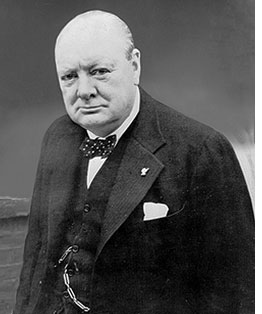
Winston Churchill is probably no stranger to anyone. He was an inspirational British leader during the Second World War.

He was also a writer, historian, poet, artist and the only British Prime Minister to receive the Nobel Prize in Literature.

Here are a few of my favorite fundamentals from Churchill on how to improve your life.

1. Focus on what you are doing right now.

“It is a mistake to look too far ahead. Only one link in the chain of destiny can be handled at a time.”

“It is always wise to look ahead, but difficult to look further than you can see.”

When you start to look too far into the future then any task or project can seem close to impossible. And so you shut down because you become overwhelmed and start surfing the internet aimlessly instead. That is one of the reasons why it is good to plan for the future but then to shift your focus back to today and the present moment.

Then you just focus on taking the first step today. That is all you need to focus on, nothing else. By taking the first step you change your mental state from resistant to “hey, I’m doing this, cool”. You put yourself in state where you become more positive and open, a state where you may not be enthusiastic about taking the next step after this first one but you are at least accepting it. And so you can take the next step. And the next one after that.

The thing is, you can’t see the whole path anyway and it will shift and reveal itself along the way. That’s why the best of plans tend to fall apart at least a bit as you start to put it into action. You discover that your map of reality doesn’t look like reality.

2. Be concerned about action.

“I never worry about action, but only about inaction”

Yes, taking action can lead to failure, rejection or making mistakes. There is always a risk for that. But if you stay in inaction then you are pretty much guaranteed that nothing will change or improve.

How can you improve your action habit though? Three tips:

  • Reconnect with the present moment. This will help you snap out of over thinking and just go and do whatever you want to get done. It is one of the best tips I have found so far for taking more action since it puts you in a state where you feel little emotional resistance to the work you’ll do. And it puts you in state where the right actions often just seem to flow out of you in a focused but relaxed way and without much effort.  One of the simplest ways to connect with the present moment is just to keep your focus on your breathing for a minute or two. Check out 7 more tips in 8 Ways to Return to the Present Moment.
  • Lighten up. One way to dissuade yourself from taking action is to take whatever you are about to do too seriously. That makes it feel too big, too difficult and too scary. If you on the other hand relax a bit and lighten up you often realize that those problems and negative feelings are just something you are creating in your own mind. With a lighter state of mind your tasks seems lighter and becomes easier to get started with.
  • Start small. To get from a state where you just feel like sitting on your chair and doing nothing much to one where you take action over and over you can do this: start small. Getting started with your biggest task or most difficult action may seem too much and land you in Procrastinationland. So instead, start with something that doesn’t seem so hard. One of my favorites is simply to take a few minutes to clean my desk. After that the next thing doesn’t seem so difficult to get started with since I’m now in a more of a “take action” kind of mode.

3. Be an optimist.

“The pessimist sees difficulty in every opportunity. The optimist sees the opportunity in every difficulty.”

“Attitude is a little thing that makes a big difference.”

“I am an optimist. It does not seem too much use being anything else.”

Focusing on what helps you sure makes a huge difference compared to if you keep focusing on what is wrong in every situation or what makes you more of a victim. It’s like living in two different worlds.

How do you make the shift to a more optimistic attitude? Well, it takes time. But gradually you can change it. Four of my own most favorite tips are:

  • Take care of the basic fundamentals. This is for me the most important thing you can do to maintain and strengthen your positive attitude. How you eat, sleep and workout is huge factor. A good lifestyle, how you live your life on normal days determine how you feel, think and how much energy you will have.
    For example, exercising and keeping my testosterone levels pretty high consistently – I do that by focusing on free weight exercises that target many and big muscle groups – is a very simple way to get a lot of positive emotions to flow through my body automatically. A good workout always seems to do the trick.
  • Positive influences. Fill your mind and emotional system with positive input from people, music and programs/books. Other people’s thoughts have a big influence and emotions are contagious. Limit your time with negative people. Reduce TV or magazines that may make you feel worse about what you don’t own or your body. Or just create fear and negativity within you (for instance a lot of news shows). Limiting negative influences can make it a lot easier to keep the positive attitude up.
  • Set the context for your day. What you do early in the day often sets the context for your day. We have a tendency to want to be consistent with what we have done before. You can use that your advantage in few ways. You can for example do the hardest thing on your to-do list first. When it is done you’ll feel good about yourself and it makes the day feel easier and you’ll have less inner resistance to getting the rest of the tasks of the day done.
  • Act as you want to feel. Act as if you are feeling positive. After a few minutes you will actually feel it for real. So smile. Use positive language. And so on. It feels weird at first but it really works.

Just practicing these four things in a consistent way can make a huge difference in your life.

4. Be persistent. Don’t give up.

“Continuous effort – not strength or intelligence – is the key to unlocking our potential”

“If you’re going through hell, keep going.”

Since society often tells us to look for quick fixes it’s easy to make the mistake of giving up to soon. After you have failed perhaps 1-5 times. That’s the “normal” thing to do. But what could have happened if someone just kept going after that? And for each failure learned more and more about what works?

I think people often make a mistake of giving up too early. Your mind probably has a reasonable time-frame for success. This might not correspond to a realistic time-frame though.

It’s useful to take a break from advertised perspectives and let more realistic perspectives seep into your mind. Learn from people who have gone where you want to go. Talk to them. Read what they have to say in books or online. This will not give complete plan but a clearer perspective of what is needed to achieve what you want.

Now, that’s not to say that you should never quit. But it can be helpful to keep going on your current path for a while longer.

And that’s not to say that you should do the same thing over and over in exactly the same manner. It’s better to do and get an experience. Take the lessons you can learn from that real life experience. And then adjust how you do things as you try again.

It obviously helps immensely if you find what you really like to do. And what you really, really want. Then you’ll find the inner motivation to keep going, to get what you want and to build on inner strengths like persistence.

5. Don’t lose the enthusiasm.

“Success is going from failure to failure without losing enthusiasm.”

It’s very easy to get down on yourself and your results when things don’t go as planned. What was once enthusiasm can quickly become apathy and pessimism.

But how do you do keep up the enthusiasm after things have gone wrong and you just feel like giving up? Well, as I mentioned in the previous fundamental, it certainly helps to have something you really like doing and something you really want.

And the tips found in fundamental # 3 such as keeping your energy up, acting as you would like to feel and keeping away from negative influences work very well here too. A good additional tip is simply to ask better questions in “negative” situations. Instead of asking yourself why this or you suck ask yourself questions that empower you.

Questions like:

  • What can I learn from this?
  • What is the hidden opportunity in this situation?

6. Remember, most troubles never happen.

“When I look back on all these worries, I remember the story of the old man who said on his deathbed that he had had a lot of trouble in his life, most of which had never happened”

One final, quick thought. But a very important one. Most things you fear will happen never happen. They are just monsters in your own mind. And if they happen then they will most often not be as painful or bad as you expected. Worrying is most often just a waste of time.

This is of course easy to say. But if you think back and remind yourself of how little of what you feared throughout your life that has actually happened you can start to release more and more worry from your thoughts.

This makes it a lot easier to start doing more of what you really want in life. And to move through your day to day life with a lighter, happier and more optimistic attitude.

How to Get Rid of a Bad Habit

Image: http://www.flickr.com/photos/nerdegutt/ / CC BY 2.0

[hana-code-insert name=’social w twitt face’ /]“Bad habits are easier to abandon today than tomorrow.”
Yiddish Proverb

“Men’s natures are alike; it is their habits that separate them.”
Confucius

Most of us have one or a few habits that we consider bad and we’d like to get rid of. But how do you do it?

Today I’d like to share I have a few suggestions that have helped me and people around me greatly.

Here are 8 tips that can help you to finally get rid of that bad habit once and for all.

  • Tell your friends and family. If you tell people around you that you will stop smoking or start working out three times a week then they will check up on you. And you will feel a social pressure to keep up with your promise now that it is let out into the world. I would recommend only telling people who you think will support you or be neutral. Negative people make things so much more difficult.
  • Make it painful to not go through with it. This may not be for everyone but you could consider making a promise to someone. For example, if you stray off the path to better health by having French fries or a cigarette then you will give your friend 100 or 500 dollars. The point is to add some possible pain to keep yourself in check on days when you may feel a bit tempted.
  • Listen to those who have gone where you want to go. Not to people who have no practical or real idea about what your challenge entails. It is important to get the best advice that actually works in real life. Seek it out in people around you, in the best books on the topic (check for the number of stars and read reviews on a site like amazon.com) and on blogs and forums that seem reliable.
  • What will this lead to in 5 and 10 years? See your future self vividly in your mind. Where are you going? Towards massive debt, a heart attack, serious illness and severe restrictions in your future? Do you want go to that place where it is very likely that you will wind up if you don’t make a change? Then see your future self where you have made the positive change. What positive and awesome things has it brought you in 5 years and in 10 years? See it all in your mind. And remind yourself of the positive and negative consequences by writing them down and reviewing them whenever you feel like quitting and going back to your old ways.
  • Avoid temptations. Know what usually triggers your bad habit. Places where you are likely to spend too much money. Things in your cupboard that will not help you to get healthier and you should not have at home at all. And people that drag you down and back into your old ways.
  • Replace it. If you stop doing one thing then it can leave a vacuum in your life. It’s easier to not relapse if you replace that space with a new habit. If you had chips and candy at home to snack on then have fruits and nuts to snack on when you feel the cravings. If you stopped checking social media and the internet for many hours each evening then replace that habit and space with reading more books or joining a club, sport or evening class.
  • Don’t remove more than one habit at a time. It may seem like a good idea to overhaul your life all at once. When regular life, stress and lack of energy interfere it usually leads to failure. Don’t try to be Superman or Wonder Woman. Take it easy and change one habit at a time to dramatically increase the odds of real life success.
  • Don’t make a huge deal out of it. If you think about it and talk about it all the time then it will feel like a huge deal to get rid of that habit. This will make each day much harder mentally and you may feel overwhelmed. Instead, keep it simple and realize that whatever habit you want to get rid of thousands if not millions of people have done so before. Yes, things do get tough from time to time. But there is no need to create a lot of extra drama around it and in the longer run make things more difficult than they need to be.

If you found this article helpful, please share it with someone else on Twitter, Facebook and Stumbleupon. Thank you very much! =)

“Most people are about as happy as they make up their minds to be.”
Abraham Lincoln

“When one door of happiness closes, another opens, but often we look so long at the closed door that we do not see the one that has been opened for us.”
Helen Keller

Living a happier life often seems to be about living your big dreams and putting in a lot of work over a long time.

I agree that it is one part. But another part of happiness is here in small ways today.

So in this article I’ll share ten small tweaks I like making to find more happiness in my daily life. I hope you’ll find something here that you can use today to make your life better too.

[continue reading…]

How to Take More Action: 10 Powerful Tips
Image by goodsurfers2008 (license).

[hana-code-insert name=’social w twitt face’ /]“Twenty years from now you will be more disappointed by the things that you didn’t do than by the ones you did do. So throw off the bowlines. Sail away from the safe harbor. Catch the trade winds in your sails. Explore. Dream. Discover.”
Mark Twain

Motivation can be a huge help for you to achieve what you want in life. But how can you find all that motivation you need?

Well, looking at timeless advice from time to time helps me. And in this article I’ll share four of my favorite timeless thoughts on motivation, four thoughts that motivate and inspire me.

Make a conscious choice.

“Be miserable. Or motivate yourself. Whatever has to be done, it’s always your choice.”
Wayne Dyer

“I was thinking one day and I realized that if I just had somebody behind me all the way to motivate me I could make a big difference. Nobody came along like that so I just became that person for myself.”
Unknown

Help, accountability and motivation from others is always good. But in the end you to be able to rely on yourself. And there is really no escaping it, because as Dyer says, it’s always your choice what to do.

So you have to consciously choose to motivate yourself. You can do that by:

  • Doing what you really, really like to do. When you really like doing something then the motivation to do it comes automatically (most of the time). And when you really want something then it simply becomes easier to push through any inner resistance you feel. You are so motivated to achieve whatever it is you want that the risks you may encounter may be scary but smaller than your desire.
  • Make a list of upsides. Write down all the benefits you will get from achieving something, like for example getting into better shape or making more money. Save it and pull that list out of the drawer whenever your motivation is lacking and review it. Or put it somewhere where you will see it every day. This is a powerful way to reconnect with your motivation and reasons for taking action.
  • Compare yourself with yourself. Comparing what you have and your results to what other people have and have accomplished can really kill your motivation. There are always people ahead of you. Most likely quite a bit of people. And a few of them are miles ahead.
    So focus on you. On your results. And how you can and have improved your results. Reviewing your results is important so you see where you have gone wrong in the past to avoid similar missteps further on. But it’s also important because it’s a great motivator to see how much you have improved and how far you have come. Often you can be pleasantly surprised when you do such a review.

But the most important thing is to take responsibility for your own motivation and feelings and not wait around for someone else to do it. When you do that you will most often find a way to get yourself to start moving towards what you want.

Walk your talk.

“Walking your talk is a great way to motivate yourself. No one likes to live a lie. Be honest with yourself, and you will find the motivation to do what you advise others to do.”
Vince Poscente

This is great tip. Whenever you don’t follow your own talk or just your inner rules of how you want to behave you tend to feel bad. Your esteem of yourself sinks and your motivation to get going does too.

So you have to be honest with yourself when you feel like you are out of alignment. You have to get up and get started again. When your talk and inner standards you have set for yourself align with what you do then you your self-esteem goes up.

You feel great because you are living like you deep down want to. And you are getting all these important things done and can enjoy the results. And then you want more of that good stuff, you sometimes feel so motivated that you can’t wait to get going.

This is not always easy. In the short run it’s often easier and less uncomfortable and scary to lie to yourself a bit and hold yourself back. But the rewards for walking your talk are big. Both on the outside and the inside.

Set big goals that really inspire you.

“Goals are not only absolutely necessary to motivate us. They are essential to really keep us alive.”
Robert H. Schuller

Without inspiring goals you tend wander around aimlessly in a confused funk.

I think the most important thing about setting goals is to find goals that really inspire and motivate you.

What are your goals? As much as possible, you have to set the goals for yourself. Should and ought to-goals aren’t good enough. Or goals that other people have set for you.

Think about your goals. Think about who has set them. Then think about what you really want in life. Then set your own goals. Write them down.

I also don’t think one should be afraid of setting big goals. Set a big goal that inspires you even if it may seem a tad unrealistic at the moment. If you have too easily achievable goals then you may find that they don’t give you that motivational spark and drive. When you start to think a bit bigger then you get motivated and your mind starts looking for the solutions that will help you achieve that goal. Thinking too small can leave you with a “meh…” feeling or make you feel like you can do it later.

And a benefit of doing things this way – even if you don’t quite achieve your big, big goal or it takes a while longer than you may have hoped for – can be found in a quote from Les Brown:

“Shoot for the moon and if you miss you will still be among the stars.”

Don’t get too hung up on being motivated to get started.

“The whole idea of motivation is a trap. Forget motivation. Just do it. Exercise, lose weight, test your blood sugar, or whatever. Do it without motivation. And then, guess what? After you start doing the thing, that’s when the motivation comes and makes it easy for you to keep on doing it.”
John C. Maxwell

Here’s another view on motivation. Maybe you don’t need it to get started? Maybe you can create it along the way?

Many times I have found it better to just do it and start working instead of trying to motivate myself to get going. At first what you do may suck quite a bit and it’s hard going. But after a while inspiration and motivation seems to catch up with you. Things start to flow easier and your work is of a higher quality.

And after you have kept going for a while you become more and more motivated. Because you start to feel like you can actually do this and you can keep going to achieve your goal. And now you are also walking your talk which boosts your motivation.

On some days you may not seem to be able motivate yourself into action. Even if you review your goals or reasons to achieve something.

That’s ok. You can still make a conscious choice based on what you know deep down is right and just start moving your hands and feet anyway. No matter how you feel inside, no matter what negative thoughts may be circling around in your head.

Try both to get yourself motivated before you begin and to just do it and find the motivation along the way. Try both ways and see what works best for you.

If you thought this article was useful, please share it with someone on Stumbleupon, Facebook and Twitter. Thank you very much! =)

“Move out of your comfort zone. You can only grow if you are willing to feel awkward and uncomfortable when you try something new.”
Brian Tracy

I believe that one of the biggest reasons why people get stuck in reading and discussing things instead of taking action to change their lives for the better is simply that it is uncomfortable.

But to make real changes in your life you have to step outside your comfort zone. At least for a little while. And regularly.

In this article I’ll share three habits that have helped me to make it easier to step out the comfort zone.

Develop a habit of mixing things up.

This is an easy and simple way to expand your comfort zone and to keep your curiousness up.

  • Try new music. I mix things up by trying new music every month. I have a look at the best music on sites like Pitchfork and Metacritic. Then I load a few of those albums on Spotify and listen.
  • Try new food. Each week we try cooking a new recipe from our cook books. It is most often a tasty experiment and helps us to find, sometimes unexpected, new favorites.

Such small habits allow you to keep from getting stuck in the same old rut. It allows you to discover a ton of new exciting things. And it’s just plain fun.

And by changing your perception of yourself from someone who sticks to the old and comfortable all the time to someone who likes to mix small and big things up it feels more natural to mix things up in any other area of life too. You break out of your comfort zone regularly and so the inner resistance and fear that things will not go well becomes a lot smaller in everyday life.

Develop a habit of doing something in small steps.

What holds us back in our zone of comfort is often a fear that facing that fear head on all at once might be overwhelming. Taking small steps is a solution to that problem. It allows you to stretch your comfort zone and slowly making it less uncomfortable and frightening.

  • Become more social. Let’s say you want to be less nervous and awkward in social situations. To solve that you can take small steps. Steps like first just saying hi to people. And being more involved in conversations at work or in school to exercise your conversation muscles. After a while those things will feel more comfortable. And so you can expand your comfort zone a little bit more.
  • Become more effective. You can start with just working 1 hour a day fully focused on your most important tasks in cone of silence (this means to shut out and shut off all distractions like the internet, the phone, the door to your office etc. as best you can). And then go back to your normal routine. The next week you can add an hour and work two fully focused hours a day. Step by step you build a more powerful habit that may feel uncomfortable at first.
  • Create something new. When I was going to start making my own products I was hesitant. I was just used to writing blog posts and putting together a whole book seemed like fun but was definitely outside of my comfort zone. So I took a small step and put together a smaller e-book at first that I give away for free to new newsletter subscribers.

By doing things this way you gradually desensitize yourself to social situations, to a new way of working or whatever you are uncomfortable with. You make it the new “normal” for you.

So, identify where you want to go or how you want to improve your life. Then make a plan with some smaller steps you can take to gradually lessen your discomfort.

Develop a habit of letting other people help you by keeping you accountable.

Being accountable to someone else is one of the most effective ways to push yourself out of comfort zones and stick with what you are doing until it becomes a new habit.

So find someone else who wants to improve in the same area as you. Or just someone who wants to improve something in his or her life and wants an accountability buddy. Then keep an eye on each other and support each other. Nudge each other in the right direction and let a bit of positive social pressure work in your favor.

If you cannot find an accountability buddy simply make the accountability public in some way. Post about your new goal or the habit you want to develop on Facebook, on your blog or tell family and friends. Or start a thread about your progress with getting into better shape on a fitness forum or on a forum related to what you want to achieve.

A few examples:

  • At the gym. If you have decided to start going to the gym it might be easier to actually get going and keeping going there every week – even after the initial enthusiasm have dissipated – if you have a gym-partner.
  • At the party. If you want to meet new people at a party then you and friend can nudge each other in the right direction. Keep each other’s mood up and go in with an open frame of mind and just have new conversations with people. Assuming rapport can be helpful if you want to do that.
  • When you want to lose weight. The diet is, in my experience, the most important thing and often the most difficult thing to not cheat too much on when you are losing weight. It becomes easier to stick with the program and not go off the rails when you have a weights loss partner – someone with similar goals – or someone you can be accountable to. Someone who nudges you back on track when you are having a bad day and want to devour a lot junk food. Someone who will tell you that it is not your weekly cheat day quite yet.

Start with one of these habits. Use that one habit as much as you can for 30 days or more until it really becomes a ingrained habit in your life.


Image by Ben Fredericson (xjrlokix) (license).

[hana-code-insert name=’socialbuttons’ /]“When a resolute young fellow steps up to the great bully, the world, and takes him boldly by the beard, he is often surprised to find it comes off in his hand, and that it was only tied on to scare away the timid adventurers.”
Ralph Waldo Emerson

What is holding you back from trying new things and improving your life in big or small ways in your daily life?

When you boil it down it is most often not about anything outside of you. Or that is at least not the biggest reason why you feel paralyzed. It’s the fear that gets to you.

It holds you back from trying something new for lunch, a new place for the evening out or a new hobby because you feel somewhat afraid that you’ll have a bad experience. So you stick to your usual routine.

It holds you back from asking someone for a date or number because you don’t want to risk being rejected or looking like a fool in front of people. So you don’t take the next step.

You stay where you are and new directions in your life remain unexplored.

This is of course very human. But fear doesn’t have to stop you from exploring life.

Now, let me share what I do to minimize my fear and to be able to move from feeling overwhelmed or paralyzed into taking action and moving forward.

1. What is the worst that could happen?

I like this very practical exercise as step number one.

So ask yourself this question. Really think about. Don’t just think about it for a few seconds. Sit down with a pen and piece of paper, your laptop or cellphone. Write it all out and think about what the realistic worst-case scenario would be.

Then write down a plan for how you can come back from such a scenario.
This step brings clarity, defuses fuzzy fears and helps you realize that you can most often bounce back pretty quickly even if the worst-case scenario somehow becomes reality.

If that only works to a degree move on to the next step…

2. Share your fear with someone.

By sharing your fear you can relieve inner pressure. By just keeping it on the inside it’s easy to build it up into this massive nightmare and extremely dangerous thing.

By sharing and by getting some input from a levelheaded friend or family member he or she can help you to alleviate the fear and inner pressure. And you can gain a much healthier perspective on things again.

If you don’t have someone to share it with or if that only works partly too then move on to…

3. Accept the fear.

It is a natural impulse to try to deny the fear when shows up in your life. Perhaps you try to not think about, you try to push it away. Or you tell yourself that you need to focus like a laser beam on the positive.

I have found that in many cases it is actually better to just accept that fear – or whatever is left of it after having worked through step #1 and #2 – is here right now (although it can be hard to sometimes convince your brain that this is a good option as it wants to deny or reject what is).

By accepting that you feel this way you stop feeding more energy into the fear and you stop making it strong. After a few minutes of fully taking in this uncomfortable feeling and accepting it then it starts to lose steam. It just seems to float away and you feel more open and relieved feelings bubbling up within.

4. Tap into curiosity and focus on the upsides.

By now, most of those fearful feelings are often pretty small and they tend come and go. You have processed much of that inner tension and resistance.

So you are now at a good point to start focusing on why you want to move towards what you have feared and to open your mind to what you can find out there.

Take out the pen and paper and ask yourself:

  • What is the opportunity in this situation?
  • What are the potential upsides I want and can have by taking these actions?
  • What are the potential upsides in one year if I start moving on this path? And in five years?
  • And how will life be in five years if I continue on the path I am now?

The answer when it comes to what you eat for lunch or if you want to have a new hobby may simply be that life becomes more fun, healthy, fulfilling and filled with newness and more surprises.

The answer when it comes to taking action to make a date happen, to get a new job or to take another direction in college could be that your life changes completely.

5. Take a small step forward. Take it slowly if you like.

You don’t have to go all in at once in many cases. Think about how you can move in small steps and slowly towards what you want. Just dip your toes in at first if that feels more comfortable. The most important thing is that you start moving and that you take action, not how fast or how much action you take at first.

If you for example want to start your own business work on that in the evening while still working at your day job or staying in school. Don’t let thinking like “I have to go all in and take huge risks” hold you back.

Or if you want to try something new today just tell yourself that:

Just for today I will try [insert something you want to try]!

You just have to do it today. Not ever again after today. You are not signing up for some huge commitment.

Tomorrow you may continue on that new path. Or you may not.

By not making this into a huge thing you have do but instead just a small step, that you can take and get done as slowly as you like, it becomes so much easier to do what is most important at first: to put yourself in motion.

Then, along the way, you can take bigger leaps if you like and speed things up. You will learn through successes and failures (and realize that you won’t die if things don’t go your way all the time). You will quit some things and continue doing other things.

But first, make it easy on yourself to take the first step.

If you thought this article was useful, please share it with someone on Stumbleupon, Facebook and Twitter. Thank you very much! =)