Sometime during the spring, when I first heard about using fasting from time to time to lose fat I thought it sounded a bit odd.

But then I thought about how people in all kinds of religions have been fasting for thousands of years.

I read a bit about it online and it seemed to be a pretty popular topic on various fitness blogs. Craig Ballantyne of Turbulence Training – the program I use every week and that helped me to lose 26 pounds – is a fan for example. So I got curious.

So I read a book called Eat Stop Eat by Brad Pilon (the guy above in the photo). It’s a pretty short and concise ebook at 91 pages.

In it Brad dispels many myths about fasting. He counters the arguments people may use to not try it out – like slowed down metabolism, fear of losing muscle, fear of becoming just too hungry – with facts and research (the book has over 50 references from different scientific studies).

The main idea of this way of losing fat is to fast for 24 hours once or twice per week. This will create a calorie deficit and you will use more energy than you put into your body. And so you lose weight. That’s it.

My Four Week Challenge

First, a quick note on fasting. As Brad writes in the intro to the book: “The information within this book is meant for healthy adult individuals. You should consult with your physician to make sure it is appropriate for your individual circumstances.”

Now, since I had gained back a few of those 26 pounds I lost earlier this year I thought I’d give it try. So I have fasted for two 24 hour periods during the last four weeks. The results? I lost 4 kilos/9 pounds.

I did no cardio exercises – I usually do the bodyweight exercises from the Turbulence Training program – during these four weeks to see how much I could lose without that training. I did however do two 25 minute workouts with free weights per week to maintain my muscle mass and just lose the fat. I did not lose any strength during the four weeks.

So how was it?

Well, pretty unobtrusive and I guess that is the point of this way of eating. You don’t have to prepare special meals. Or constantly think about what you are eating. You just stop eating. Then you just eat again as if nothing happened. It’s a pretty relaxed and very simple way of eating to lose weight.

I had hunger pangs when I usually eat but they dissipated again pretty quickly as I kept busy with work and other stuff. An interesting side effect of fasting is that productivity goes up. When you don’t have to cook food, eat and wash the dishes you can get quite a bit more done during your day of fasting.

I did however notice that it did become harder to focus for maybe four hours before the fast was done. My mind was foggier. I could still work and do some light stuff but for example writing a blog post would be hard.

But the thing is, this way of eating is very flexible. Taking your fasting day on a day when you for example have an important test in school is nothing you need to do. You can take your fast any day of the week, when it fits you and your schedule.

Besides dispelling the myths about fasting and changing how you think about food and fasting Brad also goes into the benefits of fasting from time to time – like decreased insulin levels and increased insulin sensitivity and growth hormone levels – and gives you a how to guide to live the Eat Stop Eat lifestyle with a helpful frequently asked questions section.

Anything to improve?

So I really liked the book and the intermittent fasting. But were there any negatives about it all? Well, nothing major, but I found a few things.

  • Plain standard design. Eat Stop Eat is designed with the plain standard white background and black text. That’s totally OK but I hope that perhaps more ebook authors follow the example of for instance Leo Babauta of Zen Habits and add a little more to the design to spruce things up.
  • Few food tips. One of the upsides of intermittent fasting is that you don’t have to fret about every meal to get a calorie deficit. However, I would have liked to see a little more about some recommended food and tips for when you are eating so you don’t compensate the calories lost by overeating.

UPDATE: The Special Discount Offer is Now Over.
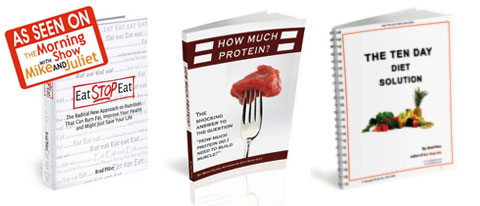
    But you can still get just the the ebook or more more expanded options such as the Advanced package that contains all the items below plus additional audio files.

    • The Eat Stop Eat ebook.
    • How Much Protein – Brad’s latest ebook – 121 pages – on protein and how much you actually need each day to build muscle.
    • The 10 day Diet Solution – Brad’s 25 page ebook on how to overhaul your diet in 10 days, how to erase bad eating habits in less than two weeks and how to avoid the biggest causes of overeating.

    Brad offers a 60 Day Money Back Guarantee with no questions asked so there is no risk for you.

    Click here to get you own copy of Eat Stop Eat

    How to Break Out of a Victim Mentality: 7 Powerful Tips

    “If it’s never our fault, we can’t take responsibility for it. If we can’t take responsibility for it, we’ll always be its victim.”
    Richard Bach

    “Self-pity is easily the most destructive of the nonpharmaceutical narcotics; it is addictive, gives momentary pleasure and separates the victim from reality.”
    John W. Gardner

    One big problem a lot of people have is that they slip into thinking of themselves as victims that have little or no control over their lives.

    In this headspace you feel sorry for yourself, the world seems to be against you and you get stuck. Little to no action is taken and you get lost in a funk of sadness and self-pity.

    So how can you move out of that mindset? In this article I’d like to share a few things that have helped me.

    1. Know the benefits of a victim mentality.

    There are a few benefits of the victim mentality:

    • Attention and validation. You can always get good feelings from other people as they are concerned about you and try to help you out. On the other hand, it may not last for that long as people get tired of it.
    • You don’t have to take risks. When you feel like a victim you tend to not take action and then you don’t have to risk for example rejection or failure.
    • Don’t have to take the sometimes heavy responsibility. Taking responsibility for you own life can be hard work, you have to make difficult decisions and it is just heavy sometimes. In the short term it can feel like the easier choice to not take personal responsibility.
    • It makes you feel right. When you feel like the victim and like everyone else – or just someone else – is wrong and you are right then that can lead to pleasurable feelings.

    In my experience, by just being aware of the benefits I can derive from victim thinking it becomes easier to say no to that and to choose to take a different path.

    It also makes it easier to make rational decisions about what to do. Yes, I know that I can avoid risk and the hard work of taking action by feeling like a victim.

    But I also know that there are even more positive results if I choose to take the other route, if I make the better choice to take a chance and start moving forward.

    2. Be OK with not being the victim.

    So to break out of that mentality you have to give up the benefits above.

    You might also experience a sort of emptiness within when you let go of victim thinking.

    You may have spent hours each week with thinking and talking about how wrong things have gone for you in life. Or how people have wronged you and how you could get some revenge or triumph over them.

    Now you have to fill your life with new thinking that may feel uncomfortable because it is not so intimately familiar as the victim thinking your have been engaging in for years.

    3. Take responsibility for your life.

    Why do people often have self-esteem problems?

    I’d say that one of the big reasons is that they don’t take responsibility for their lives. Instead someone else is blamed for the bad things that happen and a victim mentality is created and empowered.

    This damages many vital parts in your life. Stuff like relationships, ambitions and achievements.

    That hurt will not stop until you wise up and take responsibility for your life. There is really no way around it.

    And the difference is really remarkable. Just try it out. You feel so much better about yourself even if you only take personal responsibility for your own life for a day.

    This is also a way to stop relying on external validation like praise from other people to feel good about yourself.

    Instead you start building a stability within and a sort of inner spring that fuels your life with positive emotions no matter what other people say or do around you.

    4. Gratitude.

    When I feel that I am putting myself in victim role I like to ask myself this question:

    “Does someone have it worse on the planet?”

    The answer may not result in positive thoughts, but it can sure snap you of a somewhat childish “poor, poor me…” attitude pretty quickly. I understand that I have much to be grateful for in my life.

    This question changes my perspective from a narrow, self-centred one into a much wider one. It helps me to lighten up about my situation.

    After I have changed my perspective I usually ask another question like:

    “What is the hidden opportunity within this situation?”

    That is very helpful to keep your focus on how to solve a problem or get something good out a current situation. Rather than asking yourself “why?” over and over and thereby focusing on making yourself feel worse and worse.

    5. Forgive.

    It’s easy to get wrapped up in thinking that forgiveness is just about something you “should do”. But forgiving can in a practical way be extremely beneficial for you.

    One of the best reasons to forgive can be found in this quote by Catherine Ponder:

    “When you hold resentment toward another, you are bound to that person or condition by an emotional link that is stronger than steel. Forgiveness is the only way to dissolve that link and get free.”

    As long as you don’t forgive someone you are linked to that person. Your thoughts will return to the person who wronged you and what s/he did over and over again.

    The emotional link between the two of you is so strong and inflicts much suffering in you and – as a result of your inner turmoil – most often in other people around you too.

    When you forgive you do not only release the other person. You set yourself free too from all of that agony.

    6. Turn your focus outward and help someone out.

    The questions in tip #4 are useful. Another question I use when I get into the victim headspace is simply:

    “How can I give value right now?”

    Asking that question and making that shift in what you focus on really helps, even if you may not feel totally like doing it.

    So I figure out how I can give someone else value, how I can help someone out.

    And thing is that the way you behave and think towards others seems to have a big, big effect on how you behave towards yourself and think about yourself.

    For example, judge people more and you tend to judge yourself more. Be more kind to other people and help them and you tend to be more kind and helpful to yourself.

    A bit counter intuitive perhaps, but that has been my experience. The more you love other people, the more your love yourself.

    7. Give yourself a break.

    Getting out of a victim mentality can be hard. Some days you will slip. That’s OK. Be OK with that.

    And be nice to yourself. If you have to be perfect then one little slip is made into a big problem and may cause you to spiral down into a very negative place for many days.

    It is more helpful to just give yourself a break and use the tips above to move yourself into a positive and empowered headspace once again.

    Elvis Presley’s Top 3 Pearls of Wisdom

    “Music should be something that makes you gotta move, inside or outside”


    “The image is one thing and the human being is another…It’s very hard to live up to an image, put it that way.”

    If you haven’t lived under a rock since you were born I am guessing you know who Elvis Presley was.

    So let’s just move on to a few of my favourite pearls of wisdom from the King of Rock ‘n’ Roll.

    1. Put a stop to the downward spiral.

    “When things go wrong don’t go with them”

    As humans we always have a choice. We can interpret the reality around us as we choose. Two people may have the same things happen in their lives. One becomes negative and apathetic. The other one chooses to see what happened as an opportunity.

    Now, I admit, it’s not always easy to not react negatively to things that happen. But what you do after that initial reaction – go down a downward spiral or look for what you can use – is in my experience something you can have a large control over.

    There may however be some inner resistance to do so. Complaining and falling into a victim role can protect you from having to take chances and to avoid doing some hard work. It can also – for a while at least – get you the attention, comfort and validation from other people.

    But in the long run it keeps you trapped right where you are.

    So what do you do?

    • Ask yourself better questions. I write about this quite a bit. That’s because it has worked very well for me. Asking myself questions like: “What’s awesome about this situation?” and “Where is the hidden opportunity in this situation?” helps me to reframe what happened and I can pretty much always come up with some good answers that helps me to start taking action towards positive results. Sure, sometimes I don’t feel like asking the questions. Then I just do it anyway. Just because I don’t feel like it doesn’t mean that I can’t do it.
    • Understand yourself. Understand the patterns in your mind. Think back to your past and understand where the patterns lead and why you are using them. Whenever you find yourself in some difficult situation say to yourself that you will not take a negative path because you already know where it leads. Then tell yourself that you instead will ask useful questions, make a plan or something that will help you.

    You can read more about adopting a positive attitude in 8 Awesome Reasons to Blast Negativity Out of Your Life, and How to Do It.

    2. Understand through experience.

    “Don’t criticize what you don’t understand, son. You never walked in that man’s shoes.”

    It’s easy to fall into the trap of criticizing things because, well, you feel like it’s wrong. But do you really understand what you are criticising?

    From my own experience I have found that one tends to become less critical of things when you have experienced it for yourself and have an understanding. Instead of just knowledge about it.

    It’s easy to be the armchair general, knowing what is always right. Especially in hindsight. It makes you feel good and like you are right.

    But in the end the credit does not belong to this person. It belongs to the person who is out there actually doing things.

    3. Face the truth.

    “Truth is like the sun. You can shut it out for a time, but it ain’t goin’ away.”

    Although I write a lot about positive thinking and how it can be very helpful there is also the risk of overdoing it. So be a bit careful so you don’t get trapped in a bubble of positivity. The bubble of positivity is when you lie in your bed going “LA-LA-LA-LA-LA!”. While your bed is on fire.

    Don’t use positivity to repress and stop thinking about real, practical challenges in your life. If you are having real problems with money, relationships, work etc. don’t repress them with positive thinking until everything spirals out of control and comes crashing down on you like 30 story building. It’s always better to try and deal with a problem in the early stages.

    So be positive, but use common sense. Face the truth but see it through a positive lens that allows you to take action – like described in the first section of this article – instead of getting stuck in a sad funk.

    How to Change How You Feel Right Now: 5 Simple Tips


    Image by: http://www.flickr.com/photos/fabiovenni/ / CC BY-SA 2.0

    “Write it on your heart that every day is the best day in the year.”
    Ralph Waldo Emerson

    ”Life is a great and wondrous mystery, and the only thing we know that we have for sure is what is right here right now. Don’t miss it.”
    Leo Buscaglia

    Some days you fall into a negative funk. You don’t feel like doing anything much and are just going through the motions. Or you don’t seem to get anything done.

    Maybe today is such a day for you. If so, remember that the day isn’t over yet. You can still make something good out of it. And you can do so by changing your mental and emotional state.

    Here are five of my favourite ways for doing just that in a matter of minutes.

    1. Appreciate away.

    A very effective way to become a more positive person and to enjoy your life more is simply to develop a habit of appreciating more.

    If you want a few suggestions, here are a few of the things that I like to appreciate:

    • My food.
    • The weather and sunshine we are having today.
    • My health.
    • Friends and family.
    • This blog and the opportunity to write about what I want.
    • You, the reader.

    The funny thing is that if you just start appreciating something you can very quickly start jumping around with your attention and appreciate just about anything around you. You may start with the food you are eating right now. Then move your attention to the phone and appreciate that you can contact anyone – and be contacted by anyone – you’d like. You might then move your attention outside, through the window and see the wonderful sunshine, then the kids having fun with a football and then a really attractive person walking by. And so on.

    Try doing that for two or three minutes. Try to come up with all the things in yourself and your world that you can appreciate. Move your attention around from appreciation-point to appreciation-point like when you are jumping from stone to stone while crossing a stream.

    2. Change your physiology.

    If you change how you move and use your body your mood will change. If you for instance want to feel happier, force a smile for about 60 seconds. You’ll feel happier. If you want to feel confident stand up and walk around for few minutes in a confident way. You’ll feel more confident.

    One key to better use of this technique is to focus on your body and changing your movements but to then turn the focus outward, into the world around you. Doing so has given me more dependable and consistent results than when I focused inward.
    If you focus outward you don’t become that self-conscious. If you on the other hand keep your focus inward – on what you are doing – while you are moving around with a changed physiology you become self-conscious. And that self-analyzing and nervous self-consciousness counteracts much of the positive emotional effect that you can create by changing how you move and use your body.

    3. Act as you’d like to feel.

    If you want to feel more positive then ask yourself: what would a very positive person do in this situation? Do that and then you’ll feel positive.

    Make a call or answer the phone in a positive way. Write an email in a positive and enthusiastic manner. Instead of thinking that a situation will probably be boring and not so beneficial think of it as something that will be exciting, fun and useful.

    This is about doing things a bit backward. Just like when you change your physiology. Instead of being a positive person/having a positive mood for the day and therefore acting in a positive way when something happens you flip it around. You start by acting as you would in a situation if you were in a positive mood. And then you’ll create a positive mood and positive consequences in the world around you and within yourself.

    4. Ask the right questions.

    If you are asking yourself disempowering questions like: “Why did this happen to me? “, “How can get out of doing this?” and “What are all the awful things about this?” then of course you are going to feel lousy and get very little done.

    If you on the other hand start asking yourself useful questions about the situation you are in or the day you are having then you can quickly change how you feel and get yourself into action mode. You become empowered instead of getting stuck in victim thinking.

    A few good questions are:

    “What is awesome about this situation?”
    “Will this matter 5 years from now?”
    “What is the opportunity hidden within this situation?”

    5. Recall your positive experiences and memories.

    It’s easy to be overcome by negative internal chatter.

    Nonsense like: “I can’t do this, what if they think I’m incompetent, I’m gonna fail, I’m gonna fail and this why did I take this shirt, it’s so ugly”. And so on.

    When preparing for a meeting, a job interview, a presentation or anything that makes you really nervous recall your positive memories from similar experiences. Think back to when you were funny and charming. Remember the times when you were confident and relaxed during previous meetings and interviews. Let a few of your best memories wash over you. Let them comfort you and help you realize that you have been here before and things went well during those situations in the past.

    Doing so helps you remember the positive and wonderful sides of yourself. The qualities and your inner possibilities that are always there.

    You can also use this tip to remember how you felt when you felt confident in the past. How you moved, what you said. Then use those memories of actions and emotions to more easily slip into a confident state of mind by using tip #2 above.

    If you enjoyed this article, please share it on Stumbleupon and Twitter. Thank you very much!


    Image by gutter (license).

    ”Make it thy business to know thyself, which is the most difficult lesson in the world.”
    Miguel de Cervantes

    In many ways personal development material can help to change a life for the better in a big way.

    But like pretty much anything, if used the wrong way to it can stop you from growing and instead create more problems for you.

    So here is, from my personal experience, five ways that personal development information can screw with you head if you let it. I believe these are very common problems for people who get into this stuff and some stage or another. I hope you can learn something from some of the mistakes I have made.

    1. It helps you to overcomplicate stuff.

    You and your friend have the same problem. While you look for answers in personal development books and on blogs your friend don’t really knows what to do. So he tries something. He fails. But he learns something and does some other things. And so he starts to solve the problem while stumbling around a bit and realizes that it isn’t such a big deal and that he can probably figure it out.

    Meanwhile, you have looked in books and on blogs. You haven’t found perfect answers so you look a little more, just to be on the safe side and to avoid failure and the pain that comes with that. And so the problem becomes bigger and more complicated in your mind for every book or article you read. Taking action becomes something you start to fear more and more because it all seems so huge and complicated now.

    2. It gets you emotionally hooked on reading more and more.

    And so little action is taken because that is uncomfortable and scary. While getting another hit from some personal development source feels pleasurable and safe.

    It kinda feels like you are making progress and going somewhere as you read that awesome book. But shortly after you have read it that feeling diminishes. And so you read another one to get a rush of those positive feelings again.

    Just like you can hide from life, reality and the inevitable pain, embarrassment etc through shopping too much, playing too much video games or through drugs these personal development books can become just another addiction. You feel good in short bursts. But over the months or even years of time you don’t really move forward that much at all.

    3. It leaves you confused.

    One problem with the information overload age we live in is that you can get more than you can handle. For free.

    And it’s not always easy to move forward if you take in too many perspectives at once. Tony Robbins may say one thing. Eckhart Tolle might say another thing.

    Taking in various perspectives over time can help you to increase your understanding of your world. Taking in advice from 10 people at once can confuse you and lead to paralysis analysis.

    4. It makes you feel like you aren’t ever ready or good enough.

    This can become a big problem. When you get hooked on reading this stuff you may start to feel that aren’t quite good enough yet to start taking action. That you aren’t good enough to succeed with something you’d like to do. In part it can be a form of protection from the pain and effort that comes with action. In part it can be because knowing more and more but not using it keeps a low self esteem in its place (or makes it sink even lower).

    And so you study, study and study. And it is never enough. Until one day you just make a decision to tell yourself that you are good enough. Because reading more will not take you to that point when you feel that you are enough.

    When you make that decision for yourself it’s doesn’t mean that you have to stop studying. It doesn’t mean that you have to stop growing. You can feel good enough and still feel that it is fun to explore and grow in various ways.

    So you become more relaxed and not so desperate anymore to solve your problems. And when you feel like you are good enough then taking action and succeeding becomes less “heavy” and complicated. When you are good enough instead of desperate then, in my experience, life becomes lighter and doing becomes easier.

    5. It makes you think that things will be perfect and you will be too.

    It’s very easy to fall into the trap of looking for magic pills. That basically mean you look at something – a book or a just a tip – as a complete and quick solution for your problem. You think that this thing will “fix you”, just like a pill from the doctor could.

    But this is self improvement. Sure, someone may make a lot of money or lose a lot of fat really quickly. But for many any improvement will be gradual. It will be slow sometimes and quicker at some points. It’s a process that takes months or years.

    But little by little you improve yourself. Never to perfection. Life and progress will still be messy. But over time all those small steps forward really start to add up.

    So what do you do?

    How can you avoid these problems? A few tips I use:

    • Keep these things in mind. Just keeping these pitfalls in mind and being aware of them helps me to be a bit careful about how I think and behave.
    • Set limits. It is useful to set limits for yourself so you don’t overconsume personal development material. For example, make sure that you are consistently taking action towards your goals 80 percent of the time. And then you read and study 20 percent of the time. And not the other way around.
    • Take some action immediately after having learned something. Don’t wait, then you just want to read and prepare even more. Jump in instead and do one little thing to get started.

    If you like this article, please share it on Stumbleupon and Twitter. Thank you very much! =)

    Andrew Carnegie’s Top 4 Tips for Massive Success

    “Aim for the highest.”

    “You cannot push anyone up the ladder unless he is willing to climb.”

    In the late 1800s there lived a very rich man. In fact, he was so rich that he is now considered the second richest man in history. And, at least as I remember it, he became an inspiration for Scrooge McDuck.

    His name was Andrew Carnegie. You may have heard this name before if you have read the classic personal development book “Think and Grow Rich”. It was Carnegie that gave the author Napoleon Hill the assignment to interview hundreds of wealthy people about success. And those interviews became the foundation for the book.

    Here are four of Carnegie’s own top tips for massive success.

    1. Pay attention to the more important things.

    “As I grow older, I pay less attention to what men say. I just watch what they do.”

    This is one of my favourite quotes at the moment. And I have to agree, I pay less and less attention to what people say. Because in the end, what someone does is the most important thing. Talking is easy, but walking your talk is harder. And walking it consistently even though you fall, slip back into old habits and make mistakes is a huge part of success.

    Now, talking and discussing what you want to do can be very helpful. But at some point you also follow that up and take action.

    And this not just a good way to see people in a clear way. It’s also a good way to look at yourself more clearly. Because you can tell yourself and others all kinds of things all day. But what you are actually getting done shows a lot about who you are right now and how you future will look.

    2. Make it fun, make it light.

    “There is little success where there is little laughter.”

    If your life and striving for success becomes just a big struggle then it will be very hard to keep it up.

    If you want something bad then it it’s very easy to overread or overthink that thing. It seems more complicated in your mind and it also becomes “heavier”. What may have been pretty straightforward in real life becomes this huge struggle, where you are Rocky Balboa taking slow painstaking steps uphill against horrific odds. Yep, it’s a real inspiring thing as you struggle as the heroic underdog.

    It’s also a great way to make things so much harder for yourself. It’s you putting up imaginary obstacles in your own mind that aren’t even there in reality. The Rocky way of thinking about these things is very seductive. But life becomes so much lighter and more fun when you just let that stuff go.

    Sure, things may be vary in difficulty. But I believe we often make things more difficult and heavier than they really are.

    So simplify it, don’t overread or overthink it. This makes it a lot easier to relax and have fun while still working towards what you want.

    Also, create a habit of simply making it fun. Keep a positive and fun attitude with the friends you are working with. Don’t take things too serious. Learn to laugh about them a bit more. This does not only make it easier to consistently keep up the good work. It also makes it easier to handle what would previously be “huge setbacks/problems”.

    3. Be persistent. Don’t spread yourself too thin.

    “The men who have succeeded are men who have chosen one line and stuck to it.”

    How do you never get much done? Well, one good way is to try everything at once and spread yourself too thin. You get super enthusiastic for month and then you get deflated. You may even get an emotional backlash and start to feel negatively towards what you were so pumped up about since you aren’t seeing the results you’d like as you quickly as you’d like to.

    But on the other hand you have to get started and take action. Things can seem a certain way in your head when you think about doing them. But you have to actually do them for a while to gain understanding of how they really are. So to find one line that you want to stick with in some area of your life you may have to try a few of them and experiment to find what you love most to do.

    I don’t have many more tips really on how to find your line. I think you just have to think about some options and then try them to find out for yourself what you like and where there is opportunity.

    I have for example been writing on this website for almost three years now. And I still find it fun and fascinating to write about these things. It’s fun to be able to share my thoughts and what I have done and perhaps not only gain a clearer understanding for myself but also help out someone out there. I enjoy tinkering with the design and improving that. I enjoy learning more about how to spread the articles on this website to an even wider audience (and taking action on what I learn).

    I think those are some good reasons to stick with what you are doing. And so I continue doing this.

    4. Motivate yourself. It’s your choice.

    “People who are unable to motivate themselves must be content with mediocrity, no matter how impressive their other talents.”

    I wrote about this just a couple of weeks ago. Like Carnegie, I believe you have to rely on yourself to be able to keep taking action patiently and persistently. Sure, help and motivation from others is always good. But they can not always be there to support you.

    The only person who is always with you is you. So you have to choose to place the most importance for motivation on yourself and then add help and inspiration from blogs, books, friends and family when you can or feel the need.

    Like anything, this takes time and you slip and fail along the way. But over time your can become better and better at motivating yourself (or skipping the need for motivation to get started and instead just springing yourself into action).

    Without developing this habit then action and results will go up and down and be very inconsistent. And without consistency over a longer time period it does not matter so much what other talents or gifts you may have inside of you.

    Check out the recent article How to Motivate Yourself for more tips on how to motivate yourself.